Nagaya and machiya are not the same word
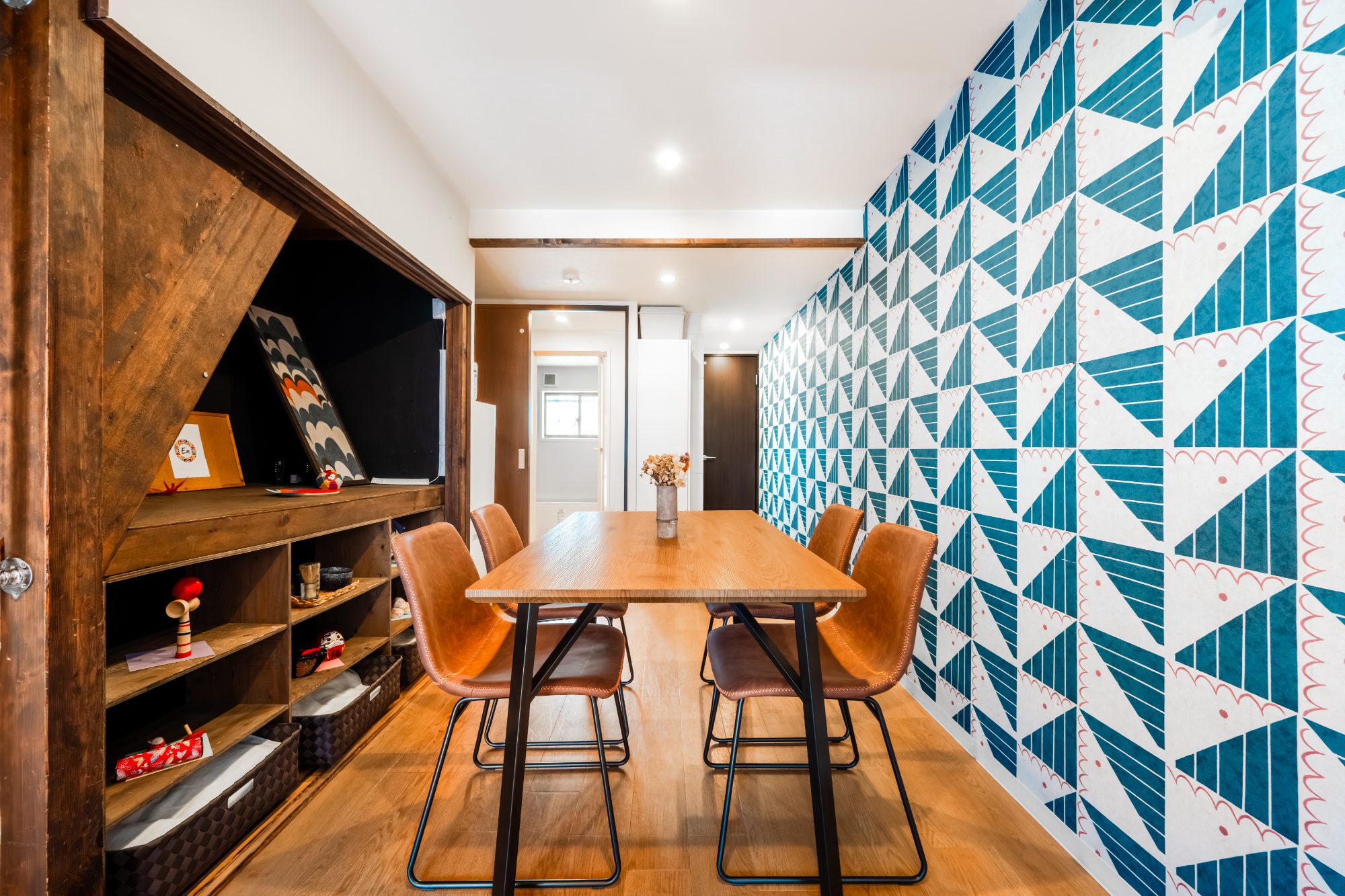
Both describe parts of Japan's older urban housing culture, but they are not interchangeable. A nagaya is a row of connected dwellings. A machiya generally refers to a traditional townhouse associated with urban commerce, often combining work and living space.
Osaka City describes nagaya as an important form of urban housing that surrounded the merchant houses of the city. Later, from the Taisho into the Showa period, more compact but carefully designed nagaya were built as the city expanded. En belongs to that continuing Osaka story, but it is an ordinary lived-in house—not a designated cultural property.
What you actually get at En
What still feels old
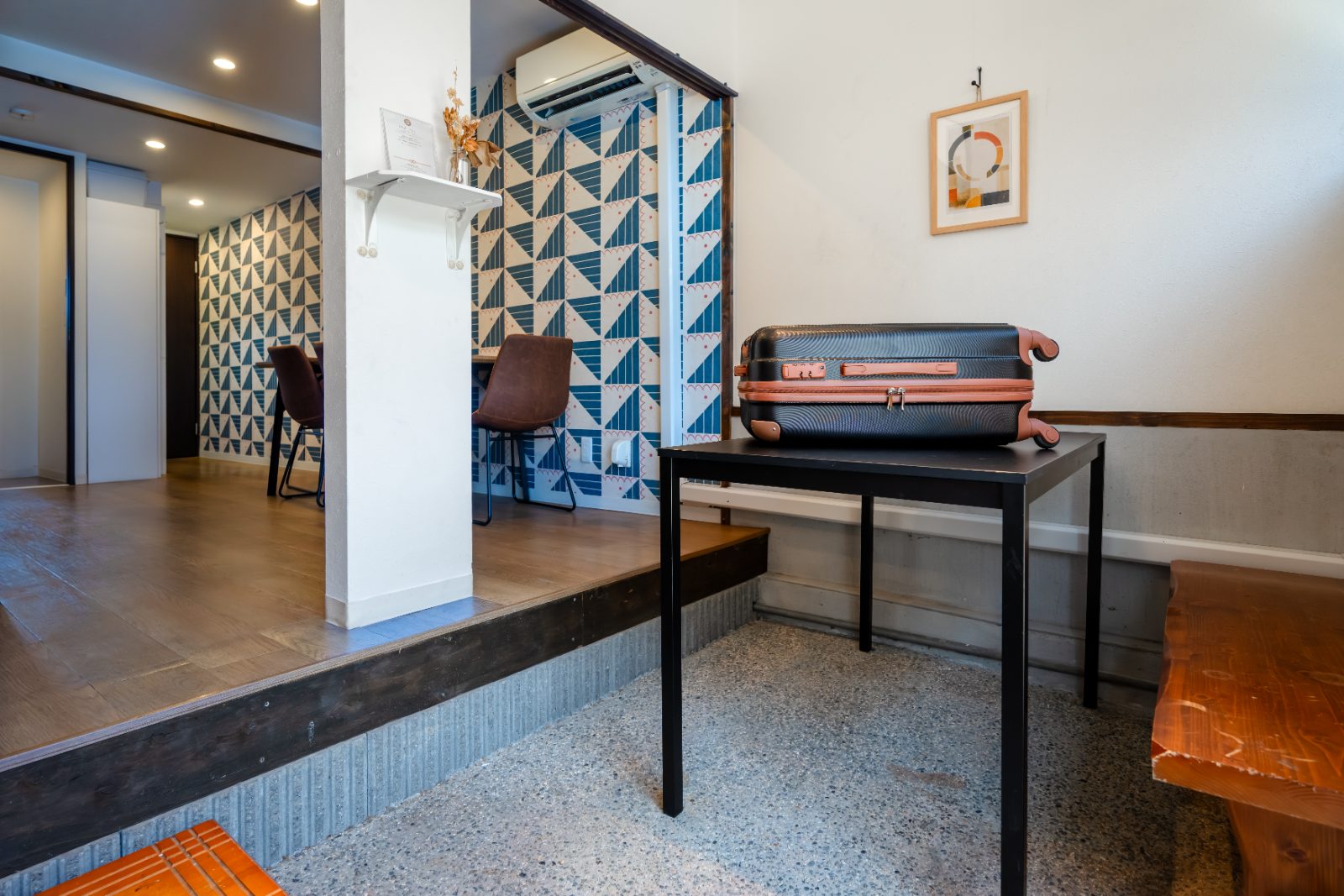
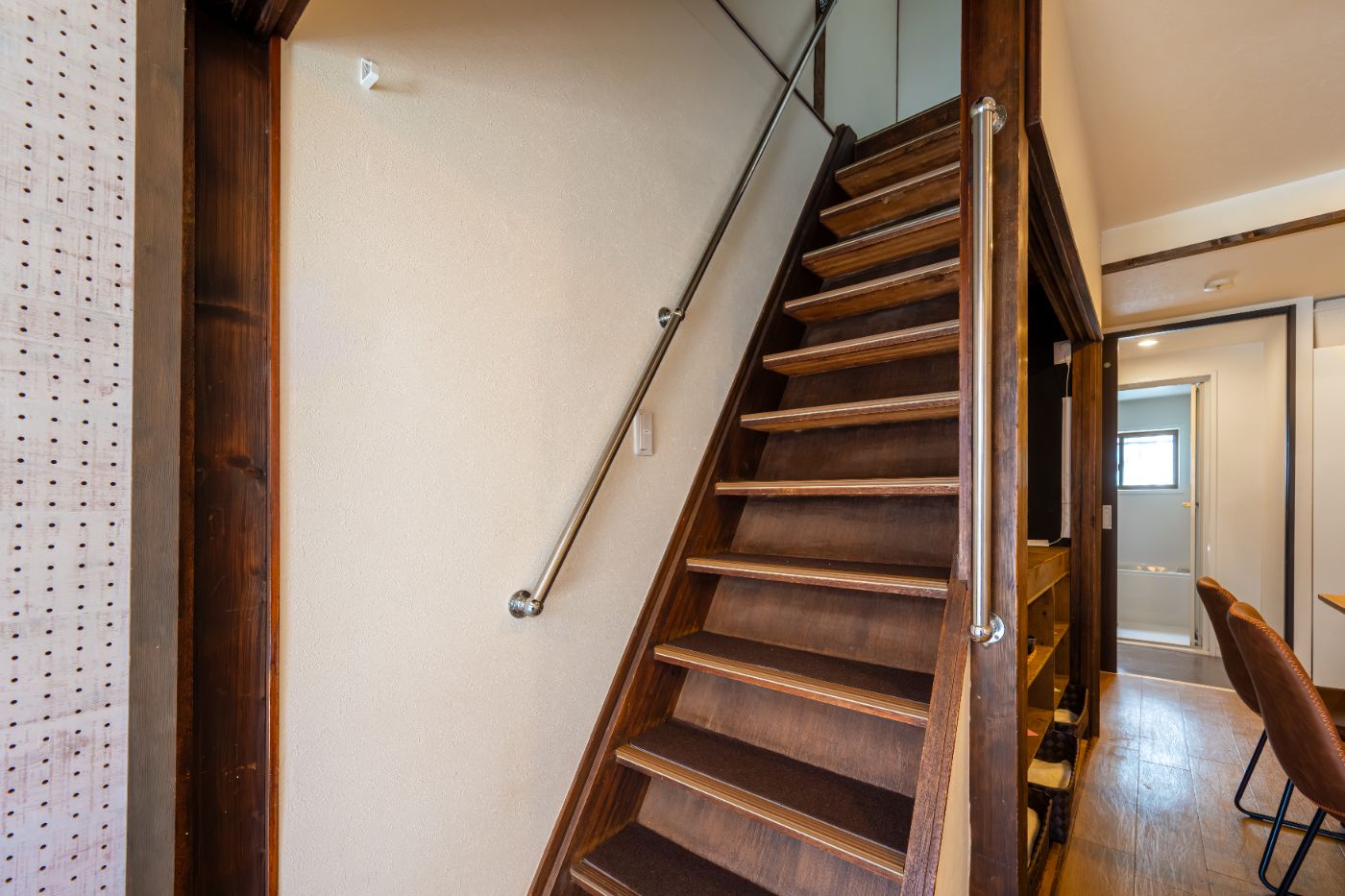
The timber, beams and compact proportions do not behave like a new hotel. Floors and walls can carry ordinary household sounds differently. The staircase to both bedrooms is steep and narrow, and some beams are low. Large suitcases are easier to leave downstairs in the doma.
These are not decorative “retro effects.” They are physical parts of the house. We show the staircase in our photos because a memorable stay begins with a clear decision, not a surprise after check-in.
A nagaya stay may suit you if…
You want an entire small house, enjoy tatami and local neighbourhood routines, and value the feeling of an older building more than the uniform finish of a hotel.
You should choose somewhere else if…
You need an elevator or step-free bedroom, dislike steep stairs or low beams, want a large full kitchen, or expect the sound isolation and anonymous service of a new hotel.
Why stay in one instead of only visiting one?
A museum can explain a building type. Staying gives you the smaller rhythms: leaving shoes in the doma, waking upstairs, setting out through a quiet lane, and returning with groceries from the shopping arcade. That is why En's promise is not “see old Japan.” It is stay inside Osaka's everyday.
Frequently asked questions
What is a nagaya?
A row of connected homes, each with its own entrance. En is one private unit in a two-storey rowhouse.
Is En a museum or a modern hotel?
Neither. It is a renovated private guesthouse that keeps visible features of an older home while adding practical amenities.
Is it suitable for travellers with limited mobility?
No. Both bedrooms are upstairs and the staircase is steep and narrow. There is no elevator.
Do guests share the house?
No. One booking reserves the whole 45 m² unit for a group of up to five guests.
Where exactly is En?
In a quiet residential part of Kyobashi, Osaka, about a 10-minute walk from Kyobashi Station. The precise address is shared after a confirmed booking.
- Osaka City: The diversity of urban housing in Osaka (Japanese PDF)
- Osaka Convention & Tourism Bureau: Teranishi-ke Abeno Nagaya
Details about En—including its 1950 construction date, layout and amenities—come from the host's property records and the current listing.